When choosing a VW TSI engine or a classic diesel, every driver faces a dilemma regarding ongoing operating costs and potential failure rates. Over the past decade, the German automaker has completely transformed its engineering approach to designing internal combustion engines. Older diesel designs have become renowned in the automotive world for their exceptional mechanical durability, while newer gasoline engines emphasize excellent dynamics and compliance with stringent emission standards. A thorough understanding of the evolution of Volkswagen engines allows drivers and mechanics to better prepare for potential unplanned workshop expenses. Regardless of the technology chosen under the hood, the best solution is always to verify the availability of certain recycled components, which are offered in their catalog by companies like Global Parts.
Contents:
- The evolution of Volkswagen engines – what was the generational change like?
- Volkswagen 1.9 TDI engine – why was it called the armored diesel?
- 1.9 TDI engine – typical system faults and the durability of a legend
- VW TSI engines – what are the advantages and disadvantages of modern petrol engines?
- 1.4 TSI engine – symptoms of failure and costly timing problems
- VW engine repair costs – is it worth investing in used components?
- VW engines – how to effectively optimize costs in the event of a block failure?

Volkswagen engines – how did the evolution and generational change take place?
The technological leap in drive systems resulted directly from growing environmental requirements and engineers' constant pursuit of higher energy efficiency from a small displacement. Classic Volkswagen engine The 1990s and 2000s were primarily heavy-duty engines with simple components that forgave drivers for neglecting service intervals. With the introduction of stringent Euro 4 and Euro 5 standards, designers had to reduce cylinder capacity while simultaneously incorporating highly advanced turbocharging. This aggressive engineering approach caused modern VW petrol engines to exhibit numerous defects, primarily in thin piston rings and the stretch-prone timing chain. On the other hand, the same technological advancements resulted in impressive fuel economy reductions and a dramatic improvement in overtaking agility. It's important to note that each [Internal link: used complete engine with accessories] representing a different era of the automotive industry will impose a completely different troubleshooting procedure.
Volkswagen 1.9 TDI engines – why are these units considered indestructible?
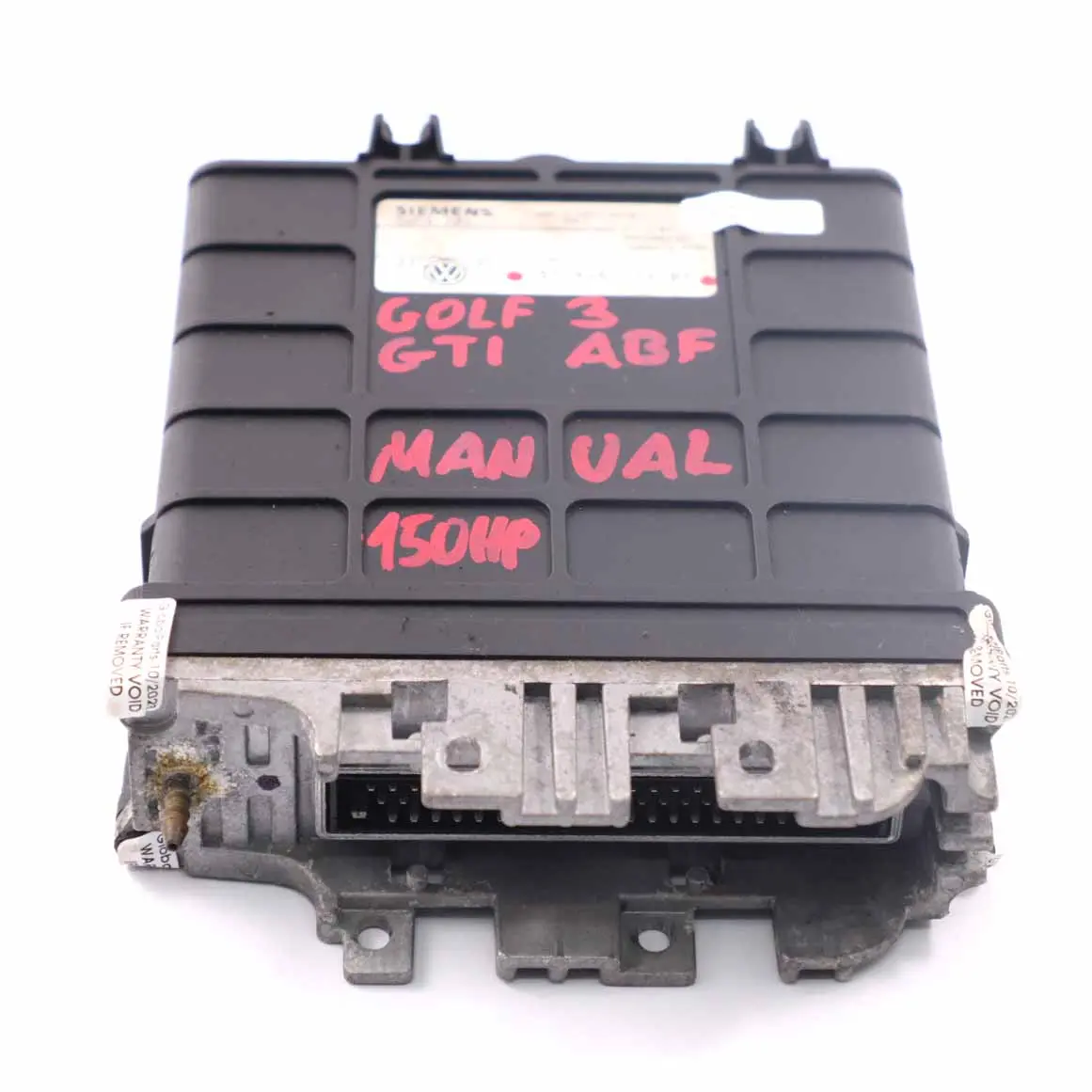
Why did the 1.9 TDI gain such immense fame? The answer lies in the armored construction of the engine block and the relatively low injection pressure compared to modern designs. In workshop terms, this means that with timely oil changes and without the need for engine overhauls, the service life of the legendary 1.9 TDIs can exceed half a million kilometers without a single problem. Older, now iconic variants operating on a mechanical VP37 rotary pump tolerated questionable fuel quality, while their more powerful successors equipped with unit injectors generated significantly better torque. Although older VW diesels boast unrivaled reliability, they absolutely require periodic inspection of turbocharger rotor clearances and intake manifold cleaning. The simple units fitted to models like the Volkswagen Golf 3 were remarkably easy to service, resulting in affordable and trouble-free servicing to this day.
Volkswagen 1.9 TDI engine – the most common equipment failures and the regeneration process
Even the most durable metal alloys eventually wear out naturally due to friction and high exhaust gas temperatures. Professional 1.9 TDI unit injector reconditioning costs are closely related to the extent of nozzle tip damage, but the final cost is usually a fraction of the cost of brand new components from an authorized service center. Drivers of these cars regularly struggle with sticking variable geometry (VTG) vanes, which causes the ECU to suddenly go into emergency mode. When this happens, a functioning [Internal link: 1.9 TDI turbocharger parts] from a reliable source can quickly restore the original boost pressure without breaking the bank. When the stator itself fails, a 1.9 TDI engine swap is so cost -effective that a complete replacement in models like the Passat B5 or the popular Volkswagen T5 engine is still a great investment. For road safety reasons, only entrust interventions in the main drivetrain and airbag mountings to a certified mechanical workshop.
VW TSI engines – where do faults in petrol cars come from?
What causes drivetrain failures in TSI engines? The primary cause of problems in the early years of production were errors in the chain tensioner calculations and carbon buildup on the intake valve heads. The innovative 1.4 TSI engine from the flawed EA111 family is a textbook example of a design in which the pursuit of performance far outstripped the durability of the alloys and polymers used. The prematurely stretched chain often lost synchronization after 60,000 kilometers, resulting in piston-valve collisions and cylinder head damage. Considering the 1.4 TSI's failure rate, the symptoms are most easily recognized by a characteristic, very loud metallic rattle coming from under the hood immediately after a cold morning start. In the most powerful variants, supported by the Twincharger system, the magnetic clutches engaging the water pump also failed, causing temperature spikes. Specific VIN/OEM selection when ordering revised tensioning kits drastically reduces the risk of these defects reoccurring.
1.4 TSI engine – key service expenses and improved modifications
Wolfsburg engineers eventually responded to numerous complaints by introducing the much more stable EA211 generation, based on a quiet and durable toothed belt in an oil bath. Despite this modernization, in early model years , replacing the 1.4 TSI timing belt remains a costly expense that can significantly strain the owner's budget. The direct injection fuel system (operating at a pressure of approximately 150 bar) is intolerant of dirt particles in the fuel system, making original 1.4 TSI injectors sold online a priority on routine repairs. Drivers struggling with severe bearing seizure typically opt for a functional used VW engine, which restores their cars to their former performance within a reasonable timeframe. It's important to remember that a heart transplant in popular compact cars, such as a light car with an engine like the Volkswagen Polo, requires rigorous bleeding of the cooling circuits according to the manufacturer's procedures.

VW Engine Repair Costs – Why Is Demand for Used OEM Parts Growing?
In an era of rapidly rising prices for brand new parts from authorized dealers, skillful reduction of service costs is key to cost-effective vehicle maintenance. Significant savings on car repairs are being gained by using recycled parts, especially since components obtained after disassembly generally maintain perfect operating parameters for years. By choosing to purchase engine parts through VAG engine parts stores, mechanics consciously avoid poor-quality Asian substitutes, which rarely maintain factory dimensional tolerances for flanges and threads. When an engine seizes due to lack of lubrication, the price of a complete VW engine block and cylinder head on the certified aftermarket allows the owner to maintain financial liquidity and avoid scrapping the car. The proven, carefully selected assortment and wide selection of used engines provided by Global Parts provide peace of mind and 100% assurance of the legality of the components purchased. Strict selection based on VIN/OEM protects the investment, eliminating the risk of product returns caused by differences in wiring harness pinouts.
VW engines – how to diagnose faults and effectively replace faulty systems?
A reliable repair cost estimate always begins with connecting a diagnostic interface to the ECU and analyzing long-term injector corrections and pressure parameters from the MAP sensors. A professional 1.9 TDI and 1.4 TSI engine service center relies on manual compression testing using a screw-in pressure gauge before identifying the cylinder head as the culprit. When salvaging the engine becomes completely uneconomical, a fully documented engine from a VW Audi Seat or Skoda dismantled guarantees the fastest route back to the highway. External design differences between model years can be disastrous, so the differences between the 1.9 TDI and 1.4 TSI engines are based on hundreds of small changes in the mounting of the lugs, the arrangement of the control units, and the vacuum lines. By using only genuine Volkswagen OEM spare parts, you are guaranteed a perfect fit and complete sealing of the flat gaskets, which will be appreciated by every enthusiast striving for mechanical perfection.
| The engine in question | Main causes of failure and weak points | Optimized fault resolution | Average repair price range |
|---|
| 1.9 TDI (VP pump) | Boost pressure drop, oil leaks from seals | Replacing a used turbine or its basic regeneration | Short | | 1.9 TDI (PD) | Wear of camshaft lobes, glass wear | Using a used, functional head with a roller | Mediocre | | 1.4 TSI (chain) | Premature chain stretching, timing gear interference | Installing a new timing belt kit before 80,000 km | Tall | | 1.4 TSI (belt) | Oil consumption, coolant pump damage | Installation of revised, used OEM components | Mediocre |
FAQ: VOLSWAGEN QUESTIONS AND ANSWERS
| Question | Answer |
|---|---|
| What exactly does the abbreviation TDI define in the Volkswagen Group dictionary? | TDI (Turbocharged Direct Injection) is Volkswagen's diesel technology based on direct fuel injection into the combustion chamber, supported by a turbocharger, which provides a compromise between high torque and low diesel consumption. |
| What is specific about the TSI engine family? | TSI (Turbocharged Stratified Injection) refers to Volkswagen's innovative petrol engine with a small displacement, high-pressure direct injection and supercharging to increase efficiency. |
| What mileage can the 1.9 TDI armored engines withstand? | With strict adherence to the oil change and fuel system filter replacement schedules, these units can easily overcome mileage exceeding 500-600 thousand kilometers without dismantling the main bearings and pistons. |
| Why does the chain in the 1.4 TSI need to be replaced so often? | The early EA111 series used tensioners of too weak a construction and chains which, under the influence of sudden thermal loads, lost their factory strength and quickly elongated. |
| When does replacing a used VAG engine become the only option? | When a vehicle's belt or chain breaks, leading to a serious collision with the valves, or when the crankshaft seizes on the main bearings due to a lack of adequate lubrication in the system. |
| Are original injectors recovered from dismantling a safe choice? | Yes, if they come from vehicles that have been rigorously inspected by a dismantling facility like Global Parts. They often last much longer on the vehicle than untested Chinese replacements with poor manufacturing tolerances available on the market. |