Classic Mini vs. Modern MINI – How the design has changed and what original Mini parts help preserve its character
The automotive icon that is the Mini has undergone a fascinating journey from a spartan city car designed by Alec Issigonis to a premium luxury vehicle under the wings of the BMW Group. While both incarnations share a distinctive silhouette and go-kart-like handling, engineering-wise, almost everything separates them—from the suspension system to the architecture of the powertrains. Maintaining these vehicles in pristine condition requires the use of high-quality components, which is why the Global Parts original parts store is a key stop for restoration enthusiasts and everyday users. Selecting genuine, salvaged components preserves the authenticity of a classic and the reliability of a modern model at a reasonable cost. This article examines how the construction of this British legend has evolved and why Mini Cooper parts service should rely on OEM components.

The design of the classic Mini and the modern MINI – the evolution of a British icon
Imagine the leap from a miniature go-kart, where passengers' knees almost touched their chins, to a city car packed with electronics. The classic Mini's design was based on a brilliantly simple idea of maximizing space utilization, which resulted in a transverse engine layout and a gearbox mounted beneath the engine – in the same oil pan. The original 1959 design utilized a subframe and remarkably compact suspension, allowing for four passengers to fit in a body just 3 meters long. The contemporary design of the modern BMW MINI, pioneered by the R50 in 2001, takes a completely different approach, prioritizing passive safety, comfort, and premium sporting performance. Today's models, such as the Mini F56, are significantly larger, heavier, and based on modular platforms shared with the Bavarian company's larger cars. Understanding these differences is essential to properly selecting Mini car parts for a given generation.
The Mini Cooper engine and the evolution of powertrains
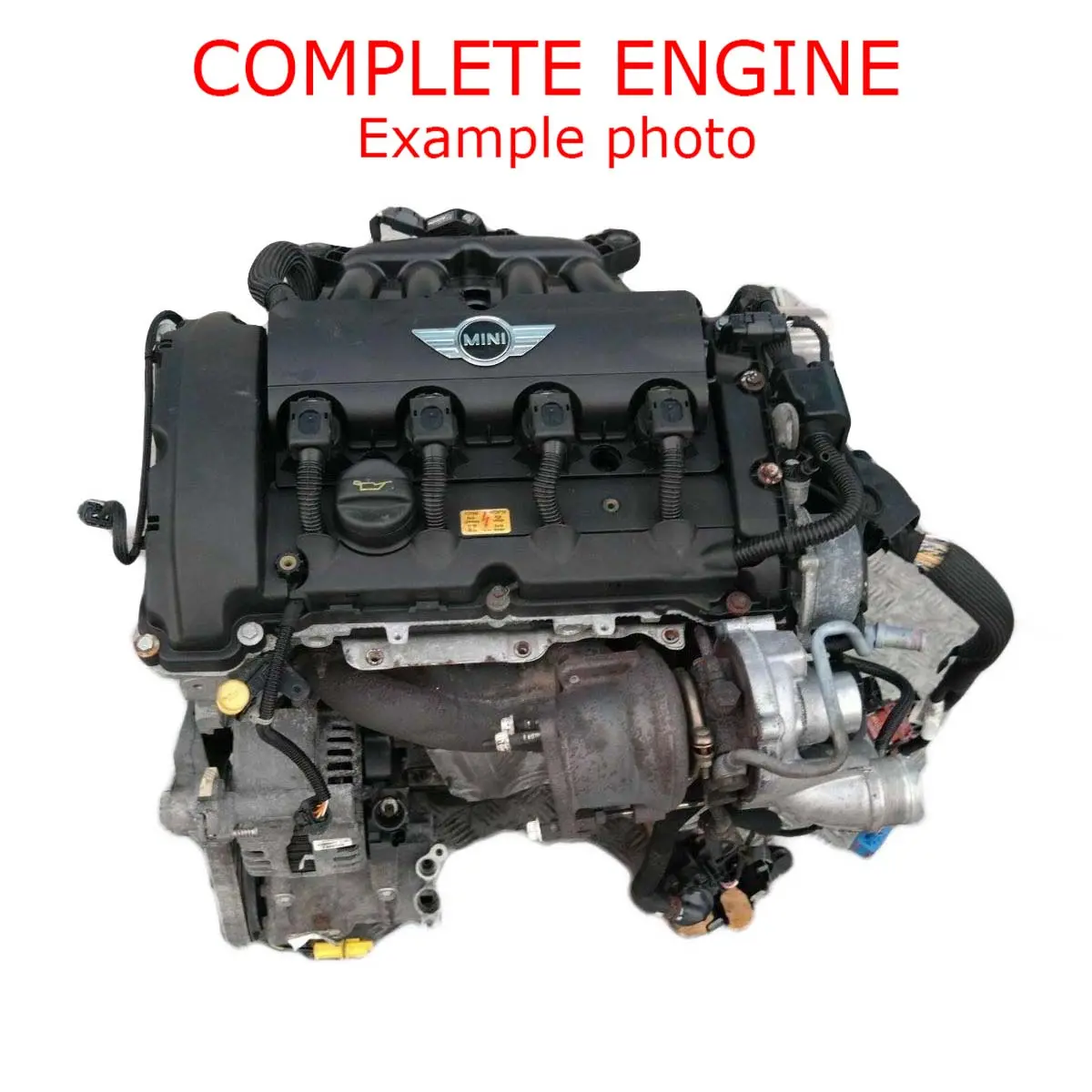
Mini powertrains have evolved from simple, carbureted A-series engines to turbocharged, modular engines with direct fuel injection. The classic Mini Cooper engine featured a cast-iron block and low weight, which, combined with appropriate tuning, allowed for success in the Monte Carlo Rally. Modern Mini Cooper S R53 and R56 engines now incorporate advanced technologies, such as a supercharger in the R53 and a twin-scroll turbocharger in the R56, which drastically increased efficiency but also increased the complexity of the system. Owners often seek components like a mini turbocharger or a Mini Cooper turbocharger to restore the factory dynamics of their vehicles. Selecting these components requires precision, so it's worth checking out Mini Cooper engine parts at trusted retailers.
Classic suspension Mini rubber snowmen and modern running gear
Instead of steel springs, the classic car featured hard rubber elements beneath its floor, earning it the title of stiffest car in its class. The classic Mini's unique suspension—rubber snowmen instead of traditional springs—was a revolutionary solution that gave the car its characteristic stiffness and agility. Instead of steel coils, Issigonis used conical rubber blocks, which provided progressive damping while minimizing the footprint of the wheel arches. Modern MINIs utilize McPherson struts at the front and an advanced multi-link axle at the rear, allowing them to retain the renowned "go-kart feel" while maintaining a high level of ride comfort. Replacing components such as stabilizer bars and shock absorbers is crucial for safety, and used Mini Global Parts parts allow you to maintain factory specifications without breaking the bank.
Original Mini parts and their role in maintaining the vehicle's character
Authenticity is a currency that never loses value in the automotive world, especially when it comes to brands with such strong DNA as MINI. Maintaining the value of original Mini parts isn't just a matter of aesthetics, but above all, durability and a perfect fit, which cheap substitutes can't guarantee. Original Mini accessories and Mini Cooper One spare parts are manufactured from materials with precisely defined durability, which is particularly important for safety-critical systems. Mini BMW Group parts guarantee that on-board electronics, such as engine control units and comfort modules, are fully compatible with the vehicle's data bus. Using OEM components from dismantling is also an ecological choice, supporting the circular economy in the automotive industry. At Global Parts, we place emphasis on component selection to ensure that every customer receives a product ready for long-term use.
Bodywork parts Mini classic and modern accessories
Every bumper profile and chrome strip define the unique face of a Mini, regardless of the decade of production. Restoring a classic Mini's bodywork is a logistical challenge, where every detail counts, from the shape of the fenders to the Mini logo on the hood. In the case of newer generations, owners eagerly modify the appearance of their cars, choosing a Mini spoiler or stylish Mini Cooper fog lights that evoke the brand's rallying past. Original Mini seats not only provide better lateral support but are equipped with appropriate pyrotechnic systems, making it impossible to replicate in unauthorized aftermarket parts. Mini dismantling parts offer access to rare interior trim elements, often no longer available in the manufacturer's official catalogs.

Mini Cooper Gearbox and Drivetrain
The Mini's drivetrain has evolved from 4-speed manual gearboxes to modern dual-clutch automatic transmissions and ALL4 systems. The Mini's gearbox in classic cars required frequent gear shift adjustments, while the modern Mini Cooper's gearbox is a precise, electronically controlled mechanism. The Mini R50 power steering pump is one of the most sought-after components in the first-generation BMW MINI, known for its specific operating characteristics. Using original oils and filters in the drivetrain is essential for reliability, and matching parts based on the VIN/OEM eliminates the risk of assembly errors.
Table 1: Mini Model Design Summary
| Model | Years of production | Suspension type | Drive type | Characteristic parts |
|---|
| Classic Mini | 1959 - 2000 | Rubber cones | A-Series (carburetor/SPI/MPI) | Box in bowl, small 10 inch rims | | MINI R50/R53 | 2001 - 2006 | McPherson / Multi-link | Tritec 1.6 (Compressor in S) | Power steering pump, central clock | | MINI R56 | 2006 - 2013 | McPherson / Multi-link | Prince 1.6 (Turbo in S/JCW) | Turbocharger, Vanos system | | MINI F56 | since 2014 | Modular BMW | BMW B38/B48 (Turbo) | LED Ring, ADAS systems |
Table 2: Comparison of consumable components
| Hi | Classic Mini | Modern MINI (BMW) | Advantage of a Used OEM |
|---|
| Braking system | Drums/Discs without ABS | Ventilated discs, ABS/DSC | Durability of castings and precision of sensors | | Steering system | Letter gearbox without power steering | Power steering el-hydr./el. | Original seals and calibration | | Rims | Steel or Minilite rims | Mini Cooper rims (light alloy) | Resistance to cracking and balancing | | Engine accessories | Generator / Alternator | Mini intelligent generator | Compatibility with on-board electronics |
FAQ – Most frequently asked questions about Mini parts
| Question (FAQ) | Answer |
|---|---|
| Why choose used Mini parts over new replacements? | Used OEM parts guarantee a perfect fit and identical material quality to the factory, which is crucial in premium cars. Aftermarket parts often don't adhere to the correct dimensions, leading to assembly issues or accelerated wear of associated components. |
| What are the rubber snowmen in the classic Mini? | These unique suspension elements, made of a special rubber compound, replace coil springs. Over time, they harden and "settle," making regular inspection essential to maintaining their characteristic comfort and ride height. |
| Do parts from the MINI R53 fit the R56? | Despite their similar appearance, most mechanical components (engines, gearboxes) are different. The R53 is based on the Tritec engine, while the R56 is based on the Prince unit, which precludes direct interchangeability of many key engine parts. |
| How to check part compatibility before purchasing? | The most effective method is to select by VIN/OEM, which allows you to identify the exact revision of a given part. The Mini Global Parts store helps verify compatibility, eliminating the risk of incorrect orders. |