Purchasing used parts online saves money, but it also carries the risk of a component not being matched to a specific vehicle. An incorrectly selected Mercedes engine or an ECU with incorrect HW/SW numbers can immobilize a car for weeks, generating unnecessary logistical and workshop costs. The key to success is the ability to accurately read factory markings and equipment codes, which can be a string of incomprehensible characters to the layman. Professional compatibility verification helps avoid installing components that physically fit the mounting holes but are electronically incompatible with the rest of the system. In the Global Parts database, each component is precisely described and photographed, allowing customers to make informed choices and ensure hassle-free installation in the workshop.
Power unit verification – Mercedes and BMW engines are more than just capacity
Displacement and declared power are definitely not enough to correctly match an engine to a modern car. Manufacturers such as Mercedes-Benz use a complex nomenclature, where the same commercial code can cover various design variants differing in accessories, oil pan, or injection type. Mercedes parts, especially complete engines, require verification of the full engine code stamped on the block to avoid problems with gearbox or wiring harness assembly. Even the popular E46 petrol engine was available with or without a secondary air pump, which determines the cylinder head shape.
N52 and B58 engine – nuances in BMW designations
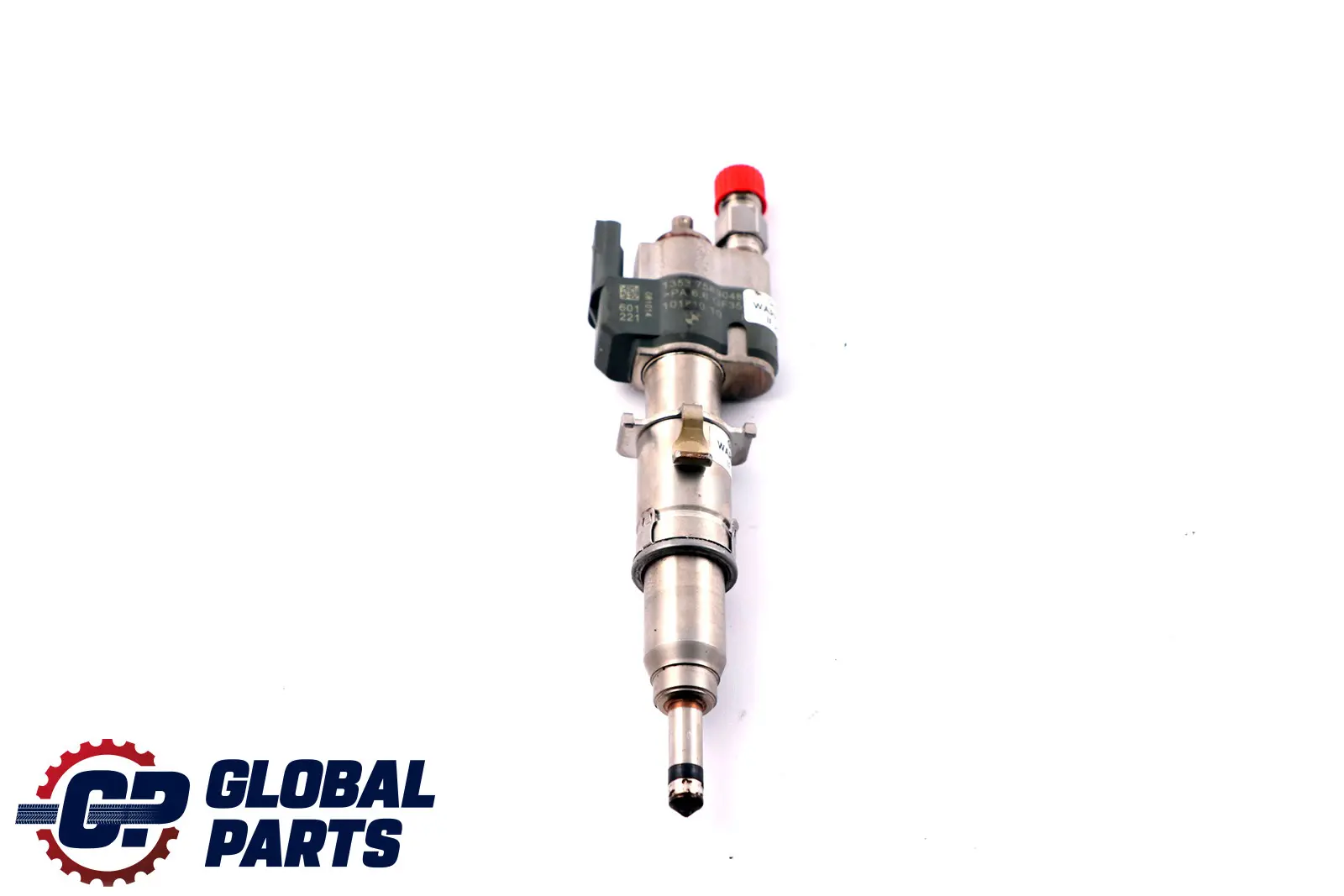
The Bavarian brand is known for its evolutionary engine development, which creates traps for buyers. BMW's N52 engine (inline 6 naturally aspirated) is available with a silver or black valve cover (N52N), which translates to a different exhaust system and Valvetronic system. The situation is similar with newer designs – the B58 engine is a modular unit with different components depending on whether it was installed in the 3 Series or the larger 5 Series. It's worth noting older but still sought-after engines: the M54B30 engine in the E46 or E39 has different components than the same engine in the X3. The N55 engine (inline 6 Turbo) had a change in turbocharger type (pneumatic vs. electric wastegate control), which is crucial when replacing. Smaller engines, such as the N46B20 or the fuel-injected N43, also require injector index verification to ensure smooth operation.

VAG Group and popular diesels – BXE, BKD and CRDi engines
In the Volkswagen Group, the engine code (usually 3 or 4 letters) is the absolute basis for parts selection. The Passat B5 1.9 TDI engine is legendary, but its versions differ in the type of unit injectors and turbocharger. In newer models, the BXE engine (known for bearing problems) is structurally interchangeable with the safer BKC engine variant, but this requires the expertise of a mechanic. Similarly, the BKD engine (2.0 TDI 16V) differs from the 8-valve versions in its cylinder head and ancillaries. In Korean cars, a CRDi engine of the same displacement may have a completely different injection system (Bosch vs. Delphi) depending on the model year, preventing interchangeability of the pins.
Drivetrain and gearbox markings – differential, CYFF and QYQ codes
The final drive ratio of the differential determines dynamics, fuel consumption, and accurate speedometer readings, and an incorrect selection will disrupt the operation of ABS/ESP systems. The differential in rear-wheel drive vehicles often lacks a data plate, only stamped numbers on the housing or flange, which must be read after cleaning off corrosion. In the case of VAG gearboxes, letter codes such as CYFF or QYQ (commonly found in DSG or manual transmissions) specify not only the gear ratios but also the type of mechatronic control. Installing a gearbox with a different code, even if it is mechanically compatible, often results in a failure mode.
Differential and gearbox in practice - the meaning of codes
When selecting drivetrain parts for a BMW, such as a differential for the E90, it's important to pay attention to the driveshaft flange and driveshaft dimensions, which varied depending on the engine version (e.g., N47 engine vs. N52B30 engine). In xDrive models, the front and rear axle ratios are crucial – they must be identical, otherwise the transfer case (VTG) will be damaged. Older designs, such as the transmission for the M54 engine in the E60, also come in ZF and GM variants, which are not interchangeable. Verifying these designations with Global Parts eliminates the risk of costly installation and removal of the wrong part.
Aesthetics and equipment – BMW E90 interior and styling packages
The interior and exterior elements are a car's calling card, and selecting them requires knowledge of the manufacturer's equipment catalogs and color codes. The BMW E90 interior was available in dozens of leather color combinations (Dakota, Nappa) and decorative trims, which may look similar in photos but differ in shade in reality. The same applies to newer models – the BMW F30's Luxury Line interior has different seats and side panels than the Sport or M-Package versions. When purchasing exterior elements, such as the VW Golf 6 grille, it's important to pay attention to the version (standard, GTI, GTD, R-Line), as they differ in the fasteners and honeycomb structure of the plastic.
Rims and body details – Styling 33 and E91 M Package
Genuine BMW alloy wheels are marked "Styling" with a corresponding number, clearly defining their design. Styling 33 is the classic design for the E39, while Styling 68 and Styling 193 are iconic for the 3 Series (E46 and E90), often sought after by enthusiasts. The sporty BMW requires a specific offset (ET) to prevent the wheel from rubbing against the brake calipers, a common mistake when buying "by eye." Package components, such as the E91 M Package bumpers, also require dedicated wheel arches and skid plates, something buyers often forget about when buying just the bumper shell. In the case of the BMW E39 Saloon (sedan), the trims and taillights do not fit the Touring trim, a common mistake for beginners.

On-board electronics – Audi A6 C6 BT module and RNS navigation
Modern automotive electronics are a connected system, where a single faulty controller can block the entire CAN bus and disable multimedia. The Audi A6 C6's Bluetooth module (Bluetooth) is available in versions that support only calls or also music streaming (A2DP), and can only be distinguished by their part number. Similarly, RNS navigation systems (e.g., RNS 310, RNS 510/315 in VW) differ in generation and processor speed, despite their identical appearance. Installing electronics often requires removing the component's protective cover at a service center, so purchasing a legitimate part with an invoice from Global Parts is crucial.
Multimedia Systems and Lighting – BMW HB4 and Coding
Lighting is another area where mistakes can easily be made – BMW HB4 halogen bulbs in fog lights were used in specific years and bumper packages. Replacing the socket with a different type requires modifying the wiring harness, which is not recommended. When upgrading to a more powerful engine, such as the powerful N63 engine (V8 Bi-turbo) or the Audi A4 B6 1.8T, it's often necessary to also replace the instrument cluster and ignition switch (CAS/EWS) to allow the immobilizer to start. Simpler units, like the M43B16 in the E46, are less demanding electronically, but even here, wiring harness compatibility is important.
Popular engine codes and their specifics (BMW / VAG)
| Engine Code / Model | Occurrence | Critical comments when purchasing |
|---|---|---|
| N47 engine | BMW E90, F30, E60 | Various versions of timing and power (143/163/177/184 HP). |
| N52B30 engine | BMW E90, E60, X3 | Versions with magnesium or plastic valve cover. |
| BXE engine | VW Golf 5, Passat B6 | Requires bearing verification; interchangeable with BKC/BJC (with accessories). |
| Audi A4 B6 engine (ALT/AVJ) | Audi A4 B6 | 2.0 ALT (oil-hungry) vs 1.8T AVJ – completely different designs. |
| M54B30 engine | BMW E46, E39, X5 | Different oil pans and oil pumps depending on drive type (RWD/AWD). |
| A4 B8 engine (CAGA/CDNC) | Audi A4 B8 | 2.0 TDI CR vs 2.0 TFSI – watch out for the oil problem in the TFSI. |
Designations of styling and electronic parts
FAQ – Frequently asked questions about parts verification
| Part Name / Code | Description / Application | Characteristic feature |
|---|---|---|
| Styling 68 | BMW E46 M-Package rims | Double arms, dedicated to the M-Package. |
| Styling 193 | BMW E90 M-Package rims | Spider pattern, silver or ferric grey. |
| Audi A6 C6 BT module | MMI 2G/3G Bluetooth module | Mounted under the seat or behind the glove compartment, fiber optic plug. |
| VW Golf 6 Grill | Radiator grille | GTI version (red stripes) vs GTD (chrome) vs Standard. |
| BMW E90 center | Interior elements | Difference in the center tunnel (iDrive vs no iDrive). |
| Question | Global Parts Expert Answer |
|---|---|
| Can a BXE engine be swapped for a BKC? | Yes, the BKC engine is considered more durable and is often used as a replacement for the emergency BXE in Golf 5s and Passats. However, this requires the relocation of some ancillary components. This operation should be performed by an experienced mechanic. |
| How to check the paint code on a BMW? | The paint code (e.g., Titansilber Metallic 354) is usually located on the data plate on the B-pillar (driver's side) or under the hood on the shock absorber mount. It's necessary when purchasing "matched" body parts. |
| What do the QYQ or CYFF codes on boxes mean? | These are unique identification codes for gearboxes within the VAG group. They define the gear ratios and differential ratios. Installing a gearbox with a different code may result in incorrect speed readings and engine operation at excessively high or low revs. |
| Does a diesel differential fit a petrol BMW E90? | Typically not. Differentials in diesel engines (e.g., N47) typically have longer gear ratios than those in gasoline engines (e.g., N52). Swapping them will result in a significant decrease in acceleration or top speed. |
| Does a module from an English car (RHD) fit a European one (LHD)? | Many electronic modules (e.g. engine) are universal, but comfort modules, door panels, steering racks and headlights are specific to left-hand traffic and are not suitable for European cars. |
| Golf 5 1.9 TDI or 2.0 TDI engine – which one to choose for replacement? | When replacing the engine, it's safest to stick with the same displacement and code as the factory. Swapping from a 1.9 to a 2.0 TDI involves replacing the gearbox, driveshafts, wiring harness, and control unit, which is uneconomical when repairing a stock car. |